Myasthenia Gravis
About Myasthenia Gravis
Advanced Neuromuscular Care Experts
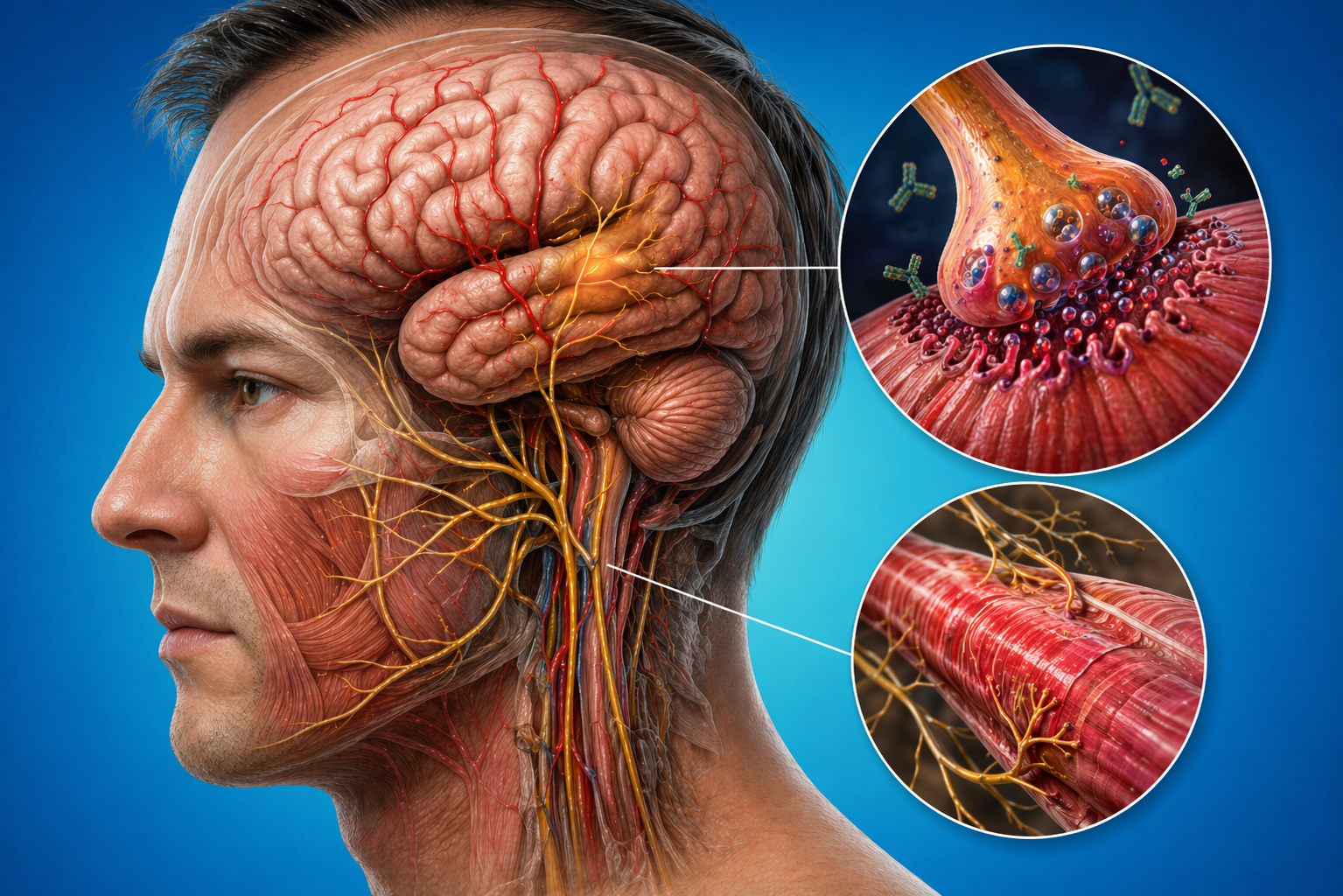
Myasthenia Gravis is a chronic autoimmune condition that causes weakness in voluntary muscles. It occurs when communication between nerves and muscles is disrupted, leading to fatigue and reduced muscle strength, especially after activity. At Preetham Neuro Centre, Dr. Preetham Reddy provides expert diagnosis and advanced treatment for Myasthenia Gravis. With over 13 years of experience, we focus on early detection, symptom control, and long-term disease management for patients in Chandanagar, Madinaguda, BHEL, and Hyderabad.
Symptoms of Myasthenia Gravis
Identify Neuromuscular Warning Signs
Early recognition of symptoms helps prevent complications and ensures timely neurological care.

Muscle Weakness
Weakness that worsens with activity and improves with rest

Drooping Eyelids
One or both eyelids may droop, affecting vision

Double Vision
Seeing two images due to weak eye muscles

Difficulty Speaking
Slurred or unclear speech due to muscle fatigue

Swallowing Problems
Difficulty chewing or swallowing food safely

Breathing Difficulty
Severe cases may affect respiratory muscles
Practice schedule
Treatment Options
Effective Myasthenia Gravis Management Solutions
Treatment focuses on improving muscle strength, controlling immune response, and preventing complications.
Anticholinesterase Medications
First-line treatment to improve communication between nerves and muscles.
- Enhances muscle strength
- Provides quick symptom relief
- Improves daily functioning
Immunosuppressive Therapy
Medications that reduce abnormal immune system activity.
- Controls disease progression
- Reduces severity of symptoms
- Long-term management approach
Thymus Gland Evaluation & Management
Assessment of thymus abnormalities often associated with Myasthenia Gravis.
- Imaging studies for thymus
- Surgical referral if required
- Improves long-term outcomes
Plasmapheresis & IVIG Therapy
Advanced treatments for severe or crisis situations.
- Rapid symptom improvement
- Removes harmful antibodies
- Used in emergency or severe cases
Respiratory Support & Monitoring
Care for patients with breathing difficulty or myasthenic crisis.
- Oxygen support if needed
- ICU-level monitoring
- Prevention of complications
Long-Term Monitoring & Lifestyle Management
Ongoing care to maintain stability and prevent relapses.
- Regular neurological follow-up
- Activity and fatigue management
- Medication adjustment plans
FAQs
Myasthenia Gravis is an autoimmune disorder causing muscle weakness due to impaired communication between nerves and muscles.
It is caused by antibodies blocking nerve-muscle signals, often linked to thymus gland abnormalities affecting immune system function.
Early signs include drooping eyelids, double vision, muscle weakness, and fatigue worsening with activity.
It is not completely curable, but treatments can effectively control symptoms and improve quality of life.
Consult a neurologist if you notice persistent muscle weakness, vision problems, or difficulty speaking, swallowing, or breathing.
Yes, severe cases can affect breathing muscles, leading to a life-threatening condition requiring immediate medical attention.
Epilepsy & Seizure Treatment
Advanced Care for Seizure Disorders
Epilepsy is a neurological disorder caused by abnormal electrical activity in the brain, resulting in repeated seizures that can affect movement, awareness, and overall quality of life. These seizures may vary from mild episodes to severe convulsions depending on the condition.
At Preetham Neuro Centre, we provide comprehensive epilepsy care with a strong focus on accurate diagnosis, personalized treatment, and long-term management. Under the expertise of Dr. Preetham Reddy, patients receive evidence-based care designed to control seizures, reduce frequency, and improve daily functioning and long-term brain health.
Symptoms of Epilepsy
Identify Early Warning Signs
Epilepsy symptoms vary widely, but early identification helps ensure timely treatment, better seizure control, and prevention of serious neurological complications.

Seizures / Convulsions
Sudden jerking movements of body due to abnormal brain activity

Loss of Consciousness
Temporary blackout or unresponsiveness during seizure episodes

Confusion / Memory Loss
Difficulty remembering events or feeling disoriented after seizures

Unusual Sensations
Fear, anxiety, or déjà vu feeling before seizure starts

Body Stiffness / Falls
Sudden muscle stiffness or unexpected falls without warning